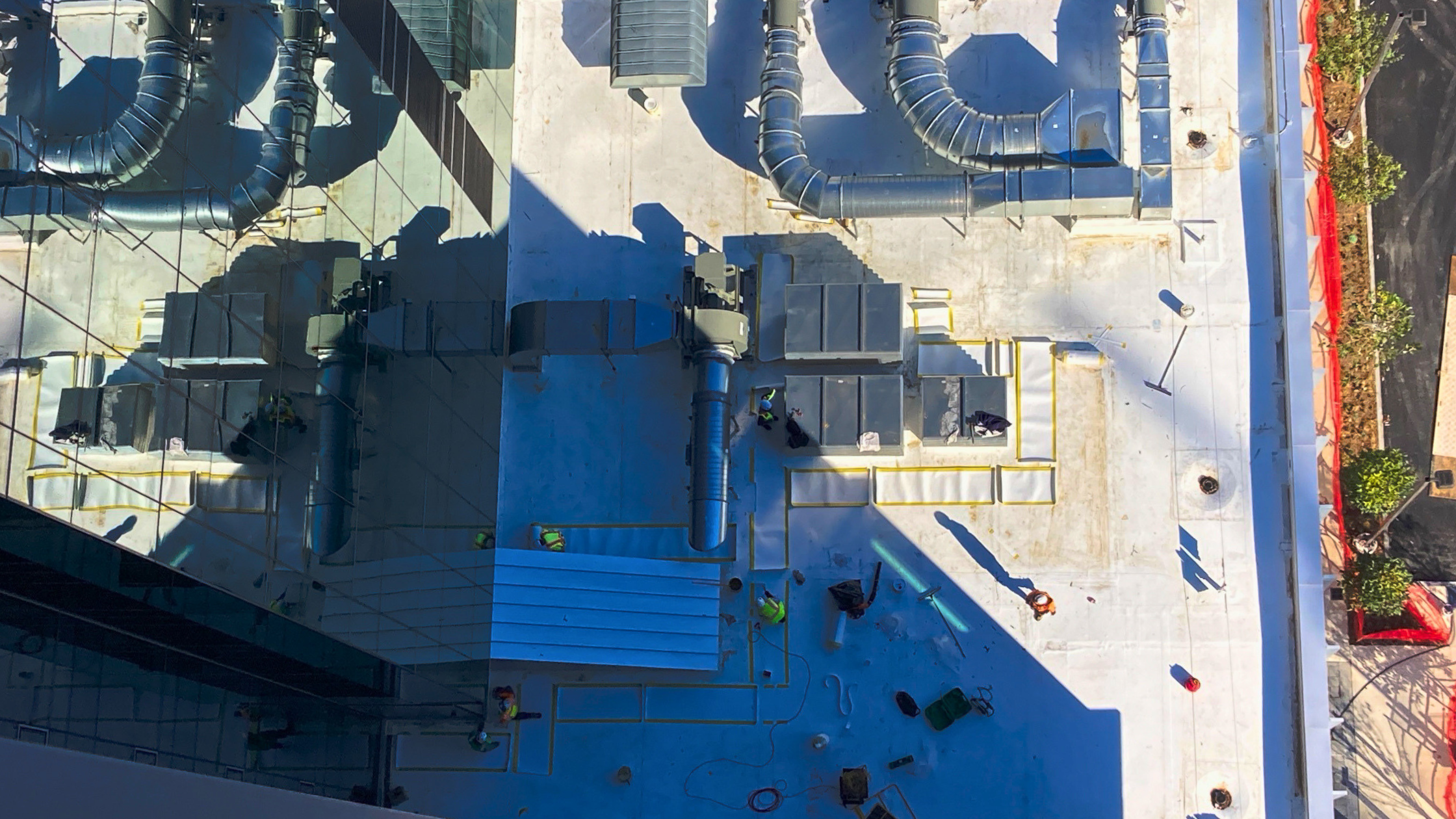
TPO vs PVC vs EPDM Roofing: A Comparison of Commercial Roofing Membranes
Commercial roofing membranes serve as a building’s first line of defense against severe weather, UV degradation, standing water, and chemical exposure. These seamless, watertight barriers also help optimize a structure’s overall energy efficiency, making it essential to choose a membrane that aligns with a building’s specific use and its exposure to the elements.
When considering a single-ply system—whether for a new build or to restore and extend the life of an existing low-slope or flat roof—the most prominent options are TPO (thermoplastic polyolefin), PVC (polyvinyl chloride) and EPDM (ethylene propylene diene monomer). While all three options provide waterproofing, each has unique features that make it better suited for certain buildings or applications.
Roof Membranes Explained and How They Differ
Roofing membranes are flexible sheets of synthetic material overlayed on commercial roofs, designed to ensure durability and provide protection from the elements, such as climate, solar impact and chemical exposure. TPO and PVC are both thermoplastic membranes with heat-welded seams, while EPDM is a synthetic rubber membrane.
To better understand how each performs, it’s important to know how they compare.
TPO Roofing
A popular choice for their durability, flexibility, reflectivity, and cost, TPO membranes are commonly used on warehouses, retail properties, schools, restaurants, office buildings, and factories. Because they are typically white or light-colored, they reflect solar radiation, which helps reduce heat absorption in warmer climates and keeps cooling costs down.
PVC Roofing
Its resistance to chemicals, grease, and oils makes PVC roofing a good choice for restaurants and some industrial facilities. This membrane features strong heat-welded seams and reflective properties in addition to their excellent chemical resistance. PVC comes in different thicknesses and configurations, allowing the building manager or roofing contractor to tailor the system to the building’s specific needs. PVC roofing remains the gold standard for roofs that face harsh environmental conditions or heavy chemical exposure.
How TPO and PVC Work
TPO and PVC membranes soften when heated and harden upon cooling. Upon installation, seams and flashing details are fused using hot-air welding equipment. The seams are often stronger than the membrane material, minimizing potential leak points.
EPDM Roofing
EPDM offers a well-established history of performance. It’s a synthetic rubber roofing material that demonstrates time-tested durability and cold-climate reliability. EPDM installations are commonly found on warehouses, office buildings, malls, and other low-slope commercial structures. Its black surface absorbs solar thermal energy and because of its excellent elasticity and resistance to temperature fluctuations, it is the preferred option in colder climates.
Because of its proven performance, UV stability, chemical resistance and longevity, EPDM roofing also makes a good option for buildings located in the Southeast. It’s often preferred for its competitive pricing and a versatility that suits various roof configurations.
How EPDM Works
Rubber roofing doesn’t melt under heat, so it can’t be welded. Installers rely on specialized adhesives or seam tapes to secure the membranes. These can degrade over decades of UV exposure and climate-related expansion and require routine maintenance or eventually replacement.
|
TPO vs PVC vs EPDM |
|||
|
TPO |
PVC |
EPDM |
|
|
Material |
Thermoplastic |
Thermoplastic |
Thermoset (synthetic rubber) |
|
Seam bonding |
Hot-air heat welded |
Hot-air heat welded |
Seam tape or liquid adhesive |
|
Color |
White (solar reflective) |
White (solar reflective) |
Traditionally black |
|
Chemical resistance |
Moderate (vulnerable to oils) |
Excellent (resists oils) |
Poor (degrades with oil exposure) |
|
Puncture resistance |
High |
High |
Good |
|
Fire resistance |
Moderate |
Naturally self-extinguishing |
Requires retardant |
|
Cost |
Mid-range |
Premium (highest upfront cost) |
Value (lowest upfront cost) |
|
Best known for |
Reflectivity & versatility |
Chemical resistance & welded seams |
Flexibility & proven performance |
Factors to Consider When Weighing Commercial Roofing Options
While TPO, PVC and EPDM offer proven durability and weather resistance, each membrane has distinct characteristics that may make one more suitable for your building than another. To ensure you make the right choice, the experts at Watertight Roofing can assess your building’s unique requirements and budget to recommend a roofing system designed to deliver the performance, protection and value you need.
Price shouldn’t be the only consideration, however. Other factors include:
- Building use: For example, a restaurant may require a different membrane because of grease and kitchen exhaust exposure than an office building. PVC would be a practical option for the restaurant because of its resistance to chemicals, oils, and grease, while TPO might be a better choice for an office building because of its resistance to UV exposure and weathering without the need for chemical resistance.
- Climate: Consider sun exposure, wind, extreme temperatures, and rain or snowfall as the elements can impact a roofing system’s performance. For facilities that face extreme temperature fluctuations, EPDM membranes may be a good choice because of its elasticity and resistance to the elements.
- Energy efficiency: Aiming to reduce solar heat absorption? TPO or PVC membranes may be good options because of their reflective qualities.
- Chemical exposure: Buildings like restaurants, food processing plants, and factories, which may be susceptible to grease, oils or certain chemicals from rooftop exhaust systems, may benefit from PVC because of its chemical-resistant qualities.
- Long-term value: Commercial property owners should consider more than the upfront installation costs. Maintenance needs, expected service life, energy efficiency, warranty coverage and potential repair expenses all play a role in determining the roof’s total cost of ownership.
Schedule a Roofing Consultation
With so many factors to consider in choosing a roofing membrane, consulting with an experienced commercial roofer to evaluate your roof’s micro-environment is an essential first step. Proper installation can make all the difference between a high-performing roofing system and premature problems. Watertight Roofing has proudly helped commercial properties across the Southeast safeguard their investments since 2009. Our team of roofing technicians is licensed, insured, and manufacturer certified.
If you have questions about TPO, PVC, or EPDM roofing and which option might best suit your building, schedule a consultation with one of our experts to ensure you make the right decision, one that delivers the best return on investment for your facility.
Protecting your most valuable assets.
Frequently Asked Questions
Why is it important to weigh roofing system options before making a commitment?
Choosing the right roofing membrane is critical because no single material fits all buildings’ needs. The building’s purpose and geographic location, for example, make a difference. The right roofing choice can impact the structure’s protection, operational performance, and overall financial return on investment.
How do TPO, PVC, and EPDM contribute to energy efficiency?
Manufactured with highly reflective bright white surfaces, TPO and PVC membranes deflect UV rays to keep buildings cool and reduce summer cooling expenses, making them practical in warmer climates. EPDM membranes make an ideal choice in cooler climates with long heating seasons because their black surface absorbs solar thermal energy, helping buildings maintain warmth.
Which roofing membrane is best for buildings exposed to fats, oils, or chemicals?
PVC membranes are best suited for buildings exposed to harsh chemicals, animal fats, or grease, making it a good option for restaurants, food processing facilities, and manufacturing plants with heavy rooftop ventilation systems.
How long do commercial roofing membranes last?
When properly installed and maintained by qualified professionals, TPO, PVC, and EPDM membranes offer long-term performance. They can last 20–30 years.
What key qualities should be considered when choosing a roofing contractor?
Property owners should evaluate a contractor’s financial stability, licensing, manufacturer credentials, warranty offerings, proof of experience, and professional affiliations. Choosing a qualified contractor is just as important as selecting the right roofing material.
 Share on X