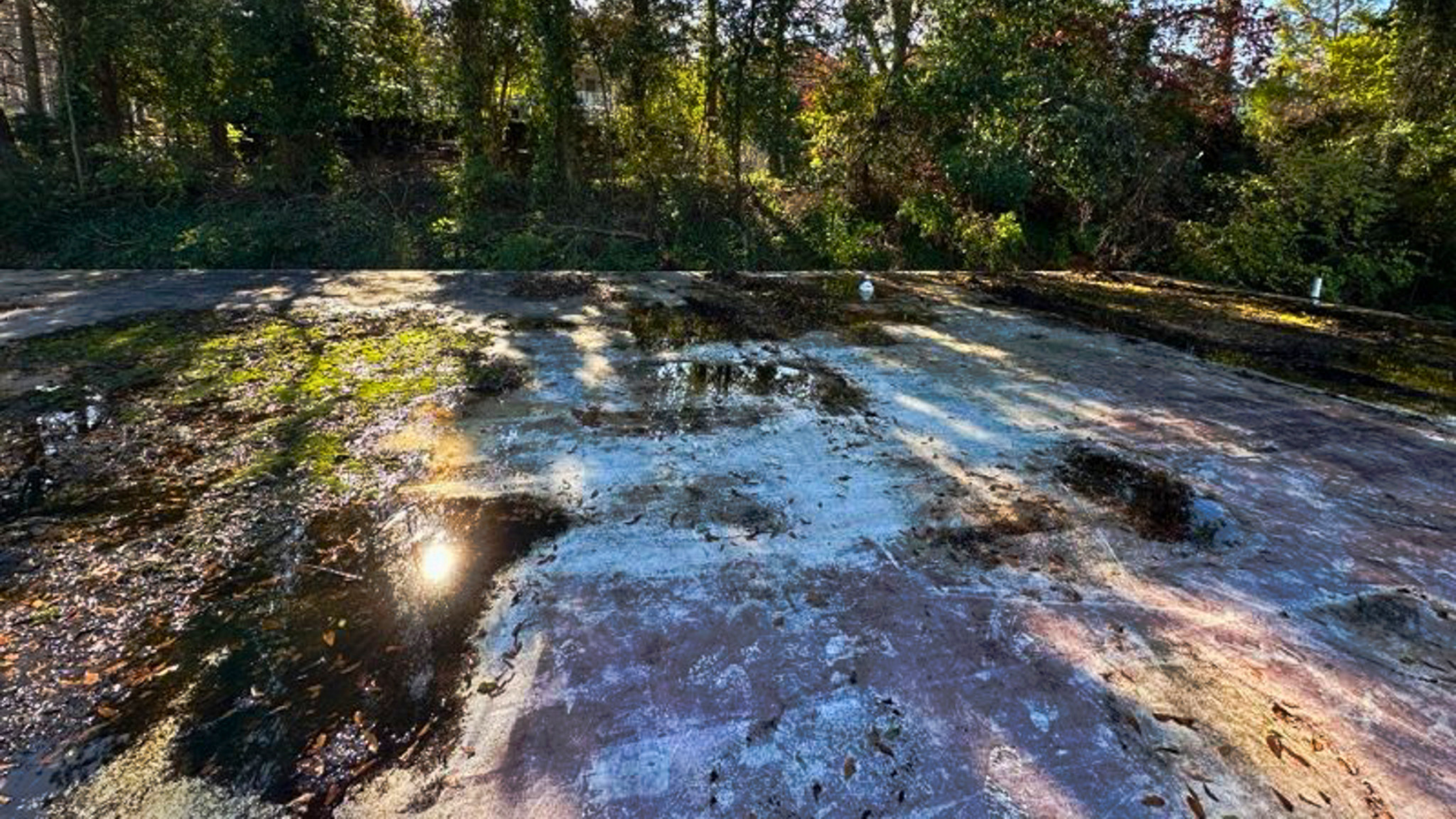
Ponding Water on Flat Roofs: Causes, Risks, and Solutions
Flat and low-slope commercial roofs manage water differently than steep-slope roofing systems. Instead of shedding rainfall immediately, they rely on proper slope drainage and roof design to move water off the surface.
During rainy seasons in Georgia and the Southeast, ponding water can become a common concern for property owners and managers. Heavy rainfall, clogged drains, low spots, and aging roof systems can all contribute to standing water on commercial roofs.
However, standing water is not automatically a roof failure. Ponding water becomes a concern only when it remains for an extended period, appears in vulnerable areas, contributes to organic growth, or indicates an underlying drainage problem. Understanding when pondering water is acceptable and when it requires action is key to protecting long-term roof performance.
What Is Ponding Water?
In roofing, ponding water refers to water that remains on a flat, or technically “low-sloped,” roof after rainfall has ended. While some temporary standing water may occur after heavy rain, it should typically drain or evaporate within a reasonable period of time.
That said, ponding water should be reviewed in relation to the location, depth, frequency, and condition of the surrounding roof system. A shallow area of water that evaporates quickly doesn’t present the same risk as water that sits continuously around seams, penetrations, rooftop equipment, or areas with visible membrane wear.
Why Ponding Water Happens on Flat Commercial Roofs
Since commercial roofs tend to be low slope, they rely heavily on drainage systems and evaporation to shed excess water. This dependency makes them susceptible to ponding water, which can develop for several reasons. In many cases, the issue is related to drainage design or maintenance, but it can also be due to changes in the roof system over time.
Common causes of ponding water include:
- Clogged drains, gutters, or scuppers
- Compressed insulation
- Debris buildup from storms or nearby trees
- Improperly installed rooftop equipment, such as HVAC units
- Insufficient slope toward drainage points
- Low spots in the roof surface
- Previous repairs that changed water flow
- Structural settlement or deck deflection
In the Southeast, repeated heavy rainfall can make small drainage issues more noticeable. A roof that performs adequately during light rain may begin holding water during longer or back-to-back storms.
When Is Ponding Water a Problem?
Ponding water is most concerning when it remains in place for an extended period or repeatedly forms in the same area. Over time, standing water can accelerate roof deterioration and increase the likelihood of leaks.
Extended ponding can contribute to:
- Membrane wear and surface deterioration
- Seam stress
- Increased weight on the roof system
- Organic growth, algae, or vegetation
- Dirt and debris accumulation
- Damage around roof penetrations or equipment
- Warranty or maintenance concerns
The location of the water is also important. Ponding near drains may point to a blockage or drainage restriction. Ponding near seams, flashing, or penetrations may increase the risk of water intrusion. Ponding in areas that already have visible cracking, blistering, or membrane damage should be evaluated quickly.
Standing water can also create conditions ideal for organic matter to collect and grow. This can be a particular problem in the Southeast, where warm temperatures and humid conditions foster the growth of bacteria and algae in stagnant water. When ponding areas become a place for algae, vegetation, or debris buildup, the roof surface may experience additional stress and deterioration.
The 48-Hour Rule for Standing Water
The “48-hour rule” is a common guideline used in commercial roofing to determine when standing water may require attention. If water remains on a roof for more than 48 hours after rainfall has stopped, it may be considered ponding water.
However, ponding water after the 48-hour mark does not always mean the roof’s drainage system has failed. Some manufacturers and roofing professionals recognize that temporary ponding can occur, especially after severe weather. The more-important question is whether the water is actively draining within an acceptable timeframe and whether it is causing damage.
Property owners should pay attention to:
- How long the water remains after rainfall
- Whether the same area ponds repeatedly
- Whether the ponding area is growing (or shrinking) over time
- Whether there is visible membrane damage
- Whether water is collecting near seams, drains, or penetrations
If standing water remains for longer than 48 hours or begins affecting the roof surface, a professional inspection can determine whether repairs, drainage improvements, or design corrections are needed.
Why Ponding Water Is Common in the Southeast
Commercial roofs in Georgia and the rest of the Southeast are regularly exposed to heavy rainfall, high humidity, and seasonal storms. These conditions make drainage performance especially important.
During rainy seasons, roofs in the region experience repeated water exposure without long dry-out periods. If drains are clogged or slope is insufficient, water can remain on the roof longer than intended. Humidity can also slow evaporation, especially in shaded areas or locations where debris has accumulated.
For property owners and managers, ponding water should be treated as a maintenance and risk-management issue. Addressing drainage concerns early can help prevent more expensive repairs and reduce the chance of disruption to tenants, operations, or building occupants.
Ponding Water Prevention
While ponding water is a normal occurrence for flat roofs, you can practice preventative methods to keep it in check. One of the primary ways is to correct the roof’s slope, if necessary. Routine roof maintenance and ensuring your drainage system is suited to your building and operating properly are also important preventative measures.
Installing Tapered Insulation to Correct Low Spots
One common solution for recurring ponding water is tapered insulation. It’s designed to create slope and direct water toward drains, scuppers, or gutters.
This approach is often used when a roof lacks proper slope on its own or has low areas where water repeatedly collects. By improving drainage, tapered insulation can help reduce ponding and support better long-term roof performance.
Tapered insulation may be considered during:
- Roof replacement
- Roof recovery projects
- Major repair work
- Drainage redesign
- Correction of recurring low spots
The right design depends on the existing roof structure, drainage layout, and building requirements. A professional roofing contractor can evaluate whether tapered insulation is appropriate and how it should be configured to move water efficiently.
Scuppers vs. Internal Drains: What Works Best for Heavy Rainfall
One of the best defenses against ponding water is a well-designed and well-maintained drainage system. Flat and low-slop commercial roofs typically rely on scuppers, internal drains, gutters, or a combination of drainage systems. The best option depends on the building design, roof layout, rainfall volume, and maintenance requirements.
Scuppers
Scuppers are installed through parapet walls or roof edges to allow water to drain off the roof. They can be effective for moving large volumes of water when properly sized and positioned.
Scuppers are often easier to inspect from the roof surface and can provide a visible indication of drainage flow; however, they must remain clear of leaves, debris, and blockage to perform properly.
Internal Drains
Internal drains move water from the roof surface through piping inside the building. They are common on larger commercial roofs and can be effective when roof slope is designed to direct water toward drain locations.
Internal drains require regular maintenance to prevent clogs. If a drain becomes blocked, water can collect quickly around the drain bowl and create ponding.
Which Drainage Option Is Best?
There is no single best drainage solution to suit all buildings. Scuppers may work well for certain roof layouts, while internal drains may be better suited for larger roof areas or buildings with parapet walls.
In the Southeast, drainage systems should be properly sized, positioned, and maintained for heavy rainfall. Overflow drainage should also be considered so water has a secondary path off the roof if the primary drainage system becomes blocked.
How Routine Maintenance Helps Prevent Ponding Water
Routine roof maintenance is one of the most effective ways to identify ponding concerns before they become larger problems.
A maintenance inspection should evaluate:
- Drains, gutters, and scuppers
- Debris buildup
- Areas of standing water
- Membrane condition
- Flashing and penetrations
- Rooftop equipment supports
- Signs of algae, vegetation, or organic growth
- Previous repair areas
Property owners should also document ponding areas with photos, dates, and rainfall conditions when possible. This helps determine whether standing water is temporary or recurring.
If ponding water is found during routine maintenance, the next step depends on the cause. Some issues may require simple debris removal or drain cleaning. Others may require repairs, drainage modifications, tapered insulation, or a larger roof system evaluation.
When Ponding Water May Require Professional Repair
Ponding water should be professionally evaluated when it remains for an extended period, appears repeatedly in the same location, or is associated with visible damage.
A roofing contractor may recommend corrective action if there is:
- Water remaining beyond 48 hours
- Ponding near seams, flashings, or penetrations
- Membrane deterioration in the ponding area
- Algae, vegetation, or debris accumulation
- Evidence of leaks below the ponding area
- Deflection or structural concerns
- Drainage systems that are undersized or blocked
The goals should be to identify why the water is collecting and determine the best long-term solution.
Can Ponding Water Affect Roof Warranties?
Ponding water can create warranty and maintenance concerns depending on the roof system, manufacturer, and terms of coverage. Some manufacturers may allow limited ponding under certain conditions, while others may require corrective action if water remains beyond a certain timeframe or causes deterioration.
Property owners should review their specific warranty documents and maintenance requirements. Routine inspections, photo documentation, and prompt repairs can support warranty compliance and long-term roof performance.
If there is uncertainty about whether ponding water is acceptable under a specific roof warranty, a qualified roofing contractor can help evaluate the issue and coordinate with the manufacturer when needed.
Schedule a Professional Roofing Assessment
Ponding water on a flat roof shouldn’t be ignored and should be evaluated properly. The duration, location, frequency, and condition of the surrounding roof system all determine whether standing water is a maintenance concern or a larger roof performance issue.
For commercial properties in the Southeast, rainy seasons make proactive drainage evaluation especially important. Addressing ponding water early can help reduce repair costs, protect warranty compliance, and extend the service life of the roof system.
Schedule a commercial roof inspection with Watertight Roofing to determine whether ponding water on your flat roof requires maintenance, repair, or a long-term drainage solution.
Protecting your most valuable assets.
Frequently Asked Questions
Some temporary standing water is normal after heavy rainfall, especially on flat, or low-slope, roofs. It becomes a concern when water remains for an extended period, appears repeatedly in the same area, or contributes to roof deterioration.
Yes, ponding water can increase the risk of leaks over time, especially if it collects near seams, penetrations, flashings, or areas with existing membrane damage.
The right solution depends on the cause. Appropriate actions may include clearing drains, repairing low areas, adding tapered insulation, improving drainage, or modifying scuppers and internal drains.
 Share on X