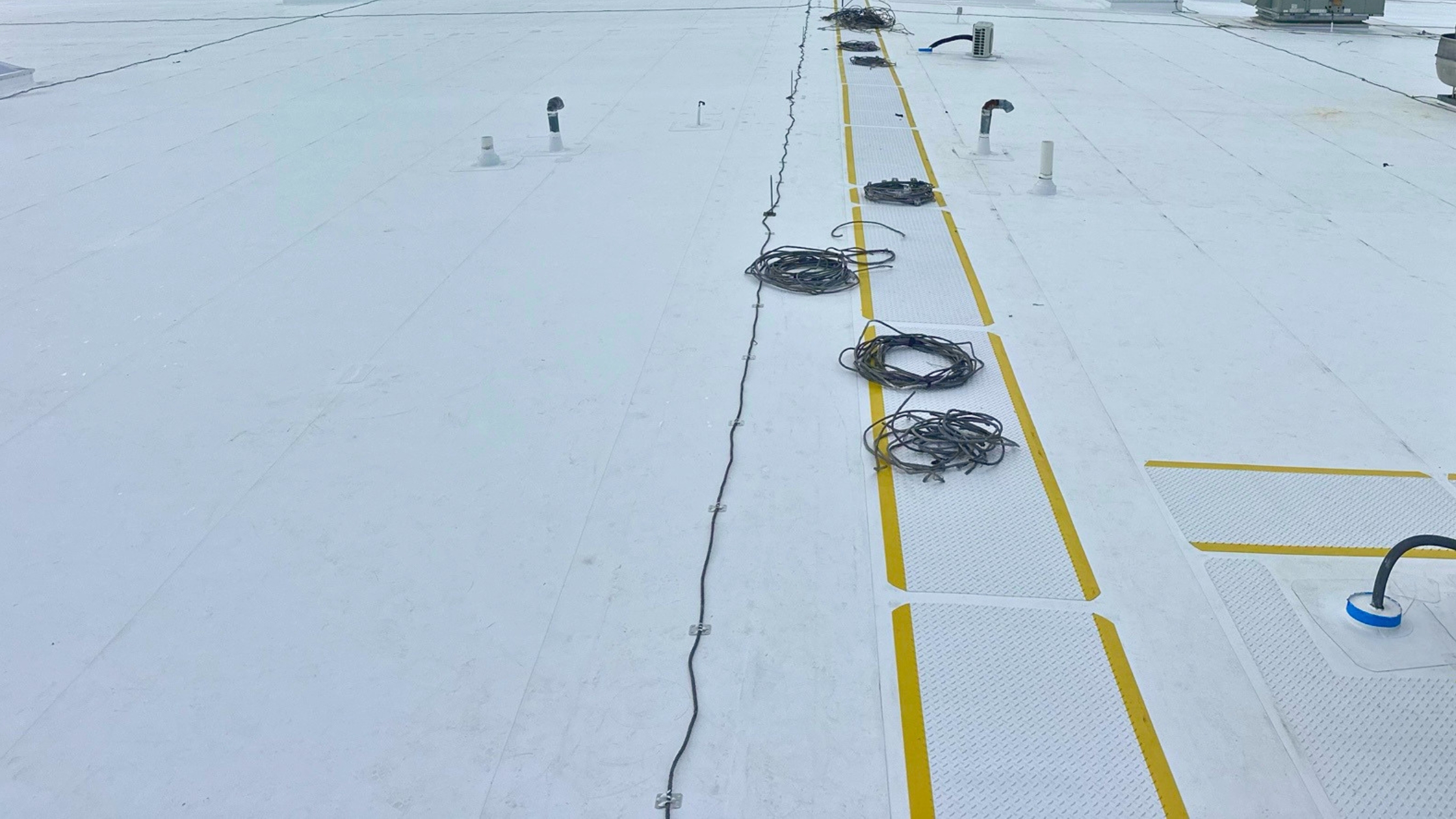
Cool Roof Coatings for Commercial Buildings: Energy Savings, Benefits, and Best Options
For commercial property owners and managers, roof performance plays a direct role in operating costs, building comfort systems, and long-term asset protection. In warm climates like Georgia and the rest of the Southeast, roofing systems are exposed to prolonged heat and humidity that can degrade building performance. To combat this, the U.S. Department of Energy highlights that "cool roofs" can lower peak roof temperatures by over 50°F by reflecting more sunlight and absorbing less heat.
For commercial buildings with large roof surfaces, reducing heat absorption at the roof level can help lower cooling demand, improve occupant comfort, and support long-term roof performance. However, not every roof is a candidate for coating. The right solution depends on the existing roof system, current condition, drainage, and long-term property goals.
What Is a Cool Roof?
A cool roof is a roofing surface designed to reflect sunlight and release absorbed heat more efficiently than a conventional roof. Depending on color and material, cool roofs can reflect upwards of 60% more sunlight.
Cool roofing can be achieved through several materials and systems, such as reflective membranes, metal roofing, shingles, tiles, and roof coatings. For existing commercial roofs, a cool roof coatings can improve surface reflectivity without requiring a full replacement when the roof is still in good or restorable condition.
How Cool Roof Coatings Work
Cool roof coatings are applied over an existing roof surface to create a reflective, protective layer. These coatings help reduce heat absorption by reflecting UV rays and sunlight away from the building.
Commercial properties with low-slope or flat roofs that receive prolonged sun exposure throughout the day can especially benefit. By keeping the roof surface cooler, reflective coatings help reduce HVAC demand during warmer months and improve overall building efficiency.
Cool roof coatings can also provide an added layer of protection against UV exposure and weathering. As a protective coating, they help extend the service life of a roof and delay the need for replacement.
Types of Cool Roof Coatings
Cool roof coatings aren’t one-size-fits-all. Each coating type has different performance characteristics, and the best option depends on the roof system, climate conditions, drainage, and long-term maintenance expectations. Existing roofs should be inspected before application to confirm that they are good candidates for coating, and any necessary repairs to patches, flashing, seams, or damaged areas should be completed before the coating is installed.
Property owners should understand how future maintenance will be handled. If a coated area becomes damaged, the affected section may need to be repaired and recoated to restore a continuous protective surface.
Acrylic Roof Coatings
Acrylic coatings are water-based products commonly used for reflectivity and UV resistance. They’re a cost-effective option for commercial roofs with good drainage and consistent sun exposure.
Acrylic coatings perform well in many warm climates, but they are generally not the best fit for roofs with persistent ponding water as the prolonged water exposure can cause them to soften and lose adhesion. If water remains on the roof surface for extended periods, another coating type may be more appropriate.
Silicone Roof Coatings
Silicone coatings provide strong UV resistance and reliable performance in wet conditions. They’re often used on commercial roofs that experience high humidity, heavy rainfall, or occasional ponding water.
Silicone may be a strong option for properties in the Southeast because of the region's moisture, storms, and long cooling season.
Polyurethane Roof Coatings
Highly reflective polyurethane coatings are often selected when added durability is a priority. They can provide stronger resistance to foot traffic, impact, and wear around rooftop equipment.
These coatings may be useful for commercial buildings with frequent rooftop maintenance access, HVAC units, or areas that require added protection. In some cases, polyurethane may be used as part of a multi-layer coating system.
Asphalt-Based or Aluminum Roof Coatings
Asphalt-based or aluminum coatings may be used on certain roof systems, depending on the existing material and project goals. For example, an aging built-up roof may benefit from an asphalt-based coating for added waterproofing, while an aluminum coating may be selected to improve UV protection and reflectivity. These coatings can help improve reflectivity and surface protection, but compatibility and performance vary by roof type.
Before applying any coating, the existing roof should be evaluated for moisture, damage, drainage issues, and manufacturer requirements.
Visit our Roof Restoration page to learn which coatings Watertight offers and how they fit into the restoration process.
Which Cool Roof Coating Is Best for Commercial Properties?
The best cool roof coating depends on the condition of the roof and the performance goals of the property. The first and most important step is determining whether the roof is a good candidate for restoration; a cool roof coating shouldn’t be applied over existing damage.
For commercial buildings with strong drainage and high sun exposure, acrylic coatings offer a cost-effective reflective solution. For roofs exposed to humidity, heavy rainfall, or ponding water, silicone coatings provide stronger moisture resistance. For areas with frequent rooftop access or higher wear, consider polyurethane coatings.
Financial Benefits of Cool Roof Coatings
Lower Energy Costs
Cool roof coatings help reduce cooling demand by lowering the amount of heat absorbed through the roof surface. For commercial properties, this can contribute to lower energy costs than normal during peak cooling months. One case study of a high-heat area reported cooling energy savings of 10–19%. The individual financial impact depends on several factors, including:
- Building size
- Roof type and condition
- Insulation levels
- HVAC efficiency
- Current energy costs
- Coating type and installation quality
Tax Credits and Energy-Efficient Roofing Incentives
Commercial building owners can also explore tax incentives for qualifying energy-efficient improvements, such as the Section 179D Energy Efficient Commercial Buildings Deduction. According to the IRS, owners who increase energy efficiency in qualifying building systems by at least 25% may be able to claim a tax deduction.
However, eligibility is not automatic. A cool roof coating may support improved energy performance, but Section 179D qualification depends on the full project scope, amount of energy savings, certification requirements, and current IRS rules. Property owners should consult a qualified tax professional to determine whether a roofing project may qualify.
Sustainability Benefits of Cool Roof Coatings
Cool roof coatings also support sustainability goals by reducing heat absorption and lowering cooling demand. For commercial properties, sustainability benefits may include:
- Reduced energy consumption
- Contribution to lowering urban heat island effect
- Reduced risk of heat-related illness
- Support for energy-efficiency goals
- Reduced landfill waste when coating delays roof replacement
Choosing reflective materials is one of the most effective ways a building owner can directly influence the environment. According to the Cool Roof Rating Council, installing just 1,000 square feet of cool roofing provides an immediate cooling benefit equivalent to removing 10 tons of carbon dioxide from the air.
When Is a Cool Roof Coating Not The Right Fit?
Roofs with Underlying Problems
Cool roof coatings can be valuable, but they aren’t the right solution for every roof. A coating may not be appropriate if the roof has:
- Saturated insulation
- Active leaks that have not been repaired
- Widespread membrane damage
- Poor drainage or severe ponding water
- Structural issues
- An incompatible existing roof surface
- A system that is near the end of its service life
Roof coatings should support roof performance, not hide underlying problems. If the existing system is damaged, repair or replacement needs to happen first.
Roofs in Colder Climates
While cool roof coatings can save on air-conditioning costs during hot weather, they may have the opposite effect during peak cold seasons. Since they reflect, rather than absorb, thermal energy, buildings can miss out on natural heat retention and require more mechanical heating in the winter.
Commercial buildings in high elevations or regions with prolonged cold seasons may find cool roofing is not advantageous. Property managers or owners should run an analysis on the expected net savings/loss before making a decision.
Schedule a Professional Roofing Assessment
Choosing the right system ensures the roof performs reliably over time and supports your property’s overall operational goals. If you’re considering a cool roof coating for a property in the Southeast, a professional assessment can help determine the best fit based on your building, environment, and long-term goals.
Schedule a commercial roof inspection with Watertight Roofing to determine whether a reflective cool roof coating is the right fit for your property.
Protecting your most valuable assets.
Frequently Asked Questions
The lifespan of a cool roof coating depends on the coating type, roof condition, installation quality, coating thickness, and maintenance. Many commercial coatings last several years, but they should be inspected regularly to monitor wear and performance.
Coatings can be applied over many existing commercial roof systems, including TPO, EPDM, modified bitumen, and metal. Compatibility depends on the roof material, surface preparation, condition, and coating manufacturer requirements.
Yes. Coated roofs should still be inspected semi-annually (per most warranties) to check for drainage issues, coating wear, seam concerns, punctures, and storm damage. Maintenance helps preserve performance and supports long-term roof protection.
 Share on X